
 Carlo Carretto, the renowned spiritual writer, spent many years living alone as a hermit in the Sahara desert. He wrote several books from that place of solitude, including one entitled, Letters from the Desert. In that book, he has a message for those of us who live busy lives in the world. “What is God trying to say to us in our busy lives?” He suggests this: “Be patient! Learn to wait – for each other, for love, for happiness, for God!”
Learn to wait! That’s not something we do easily and many of our problems flow from that.
We often don’t wait properly for things.
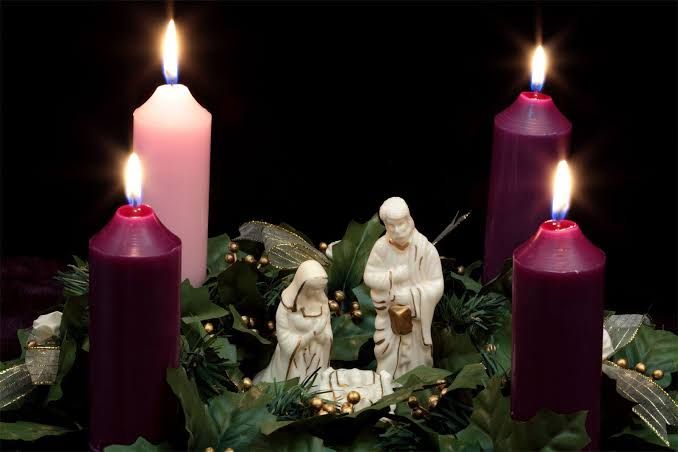
Next Sunday, November 29, 2026, the Church’s new year opens with the first candle of the Advent wreath. Four weeks of deliberate waiting stretch ahead of us toward Christmas—four weeks that refuse the world’s frantic rush and instead teach a different posture: watchfulness, hope, repentance, and quiet readiness. Advent is not merely a countdown to December 25. It is the season that holds two arrivals at once: the memory of the Child born in Bethlehem and the promise of the King who will come again in glory. Between those two poles we live—remembering what God has already done and straining forward toward what He has not yet finished. That tension is the heart of Christian time.
In a year that has already carried its share of noise, division, and distraction, Advent invites a deliberate slowing. The readings will speak of deserts blooming, of watchmen on the walls, of a people walking in darkness who have seen a great light. They will not flatter our busyness. They will ask whether we are still awake, whether our lamps are trimmed, whether our hearts still expect anything from God beyond what we can manufacture ourselves.
The traditional themes of Advent remain steady:
- Hope that is not optimism, but trust in a promise larger than our circumstances.
- Peace that is not the absence of conflict, but the presence of the Prince who reconciles.
- Joy that is deeper than cheerfulness—a gladness that can survive winter.
- Love that takes the form of a vulnerable infant and whose poverty includes and welcomes the stranger.
How does the message of Advent help us focus better on the fundamental thrust we should be giving to our lives? How does Advent help us to witness in our society to what Christ’s coming means?
Advent, is a period of waiting, of longing, of anticipation and preparation and of rejoicing that “the Lord is coming”, that “the Lord is near”; it encourages us to look to the future as a future of hope and there is no doubt that we need hope today, as individuals, as families, as communities and indeed as a nation.
Advent is very counter-cultural, because we live in an instant world, where waiting is frowned upon and where patience is seen as weakness. We should learn to think like the Old Testament prophets as they looked forward to the coming of the Saviour. They were sensitive to the experience of injustice and sin under which they lived and looked forward in hope to the coming of “the anointed one”, as one whose coming will bring the newness of peace and justice and righteousness. It was such a hope that enabled the Prophet Isaiah to dream the dream, with those beautiful words: “One nation shall not raise the sword against another, nor shall they train for war again. They shall beat their swords into ploughshares and their spears into pruning hooks”.
Advent reminds us that it is possible to change our world, starting out from where we are concretely within all the ambiguities and compromises of life, and move towards the realisation of the ideal of truth, justice and love. The Christian of every generation is called particularly to be awake and attentive to where society is slipping into wrong ways and to cry out like the prophet to return to the ways of God. In our days, sadly, nations still raise weaponry against others. How often do we read about knives being raised in violence and guns in vengeance and lives – young lives – being ruined? I am horrified to see in our world of progress and enlightenment that men and women and children are driven in their hundreds of thousands from their homes through war and suffering. Christians in our society must find the ways to speak up and stand up as witnesses to the God of peace and loving care. A God whose very birth took place on the periphery as there was no room for him in the Inn.
Advent then is a moment in which we should interrupt our daily life and think about what is essential. All too often, we live preoccupied by the hecticness of our daily lives, asleep to the wider consequences of our way of life. Following Jesus Christ is a calling to a robust engagement with the challenges of our society. The Christian life is never self-focussed but focussed on self-giving as Jesus gave his life to save us. Christians must learn the ability not just to adapt to the realities of the day but to challenge the realities and the thought-patterns of the day. The Christian must be one who stands out and has the courage to rise above conformity, even when that is not easy. Advent is not strictly a time of penance and fasting as is Lent. It is marked more rather by a growing sense of joyfulness for the fact that Jesus is coming and that his coming is near. We pray that when he comes, he will find us not closed in the comfortable and the familiar, but out there doing God’s work and confidently bringing his message of love and hope into the world around us.
As we celebrate this season of Advent, may we grow in hopefulness and gratitude.
May the light of Christ brighten this winter darkness and inspire us to act with kindness and compassion.
“Mary sustains our journey toward Christmas,
for she teaches us how to live this Advent Season in expectation of the Lord.
For this time of Advent is a time of waiting for the Lord,
who will visit us all on the feast, but also, each one, in our own hearts.
The Lord is coming! Let us wait for him!” – Pope Francis