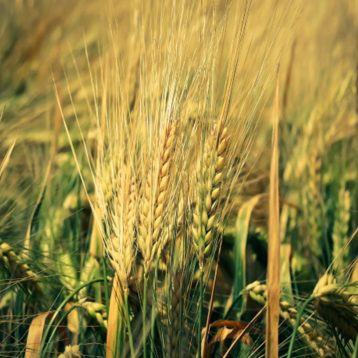
Jesus compares the Kingdom of Heaven to a field in which the master has sown good seed. In the night, an enemy comes and plants weeds, so when the crop grows it is a mixture of wheat and weed. The servants’ instinct is to pull the weeds out, but the master demands that the bad grow alongside the good … he himself will sort the wheat from the weeds at the final harvest.
It’s a typical Palestinian problem, the darnel weed, which looks just like wheat in its early stages is a menace to the harvest. The roots of the darnel weed intertwine with the roots of the wheat. To pull the darnel out can jeopardise the harvest. Similarly, just as it’s hard to tell the difference between wheat and darnel, so it’s not always easy for us to tell the difference between good and evil. A bad person can change and become good, and a seemingly good person might not be as virtuous as we imagine. It’s best if we refrain from judging; this job is best left to God.
In films and novels, the good guys always win and the bad guys always get their come-uppance. Happy endings satisfy our human sense of justice, but in reality justice seems strangely elusive. We come up against evil time and time again. Sometimes we get so angry that we want to take justice into our own hands. Sometimes we are incensed that God can allow evil to grow alongside good, but before we get too irate, maybe we need to stop and take a good long look in the mirror. What makes us so sure that we’re not weeds too? Where did we get that assurance that we are represented in the parable as the wheat?
Rarely is reality black and white. We all have good and bad inside us. We all need to change, and we all deserve the opportunity to make those changes. Perhaps this is the reason Jesus’ advises us to leave the evil to grow alongside the good. As Martin Luther King Jnr. once said, “God’s purpose is not wrathful judgement. God’s purpose is redemption, and the road to redemption is by way of reconciliation.”